How to Create an Upload Photo Button on Swift
I don't call back I need to explain what a push is. Information technology's a very bones UI control that you tin find in all apps and has the ability to handle users' touch, and trigger a certain action. If yous accept learned iOS programming earlier,Button in SwiftUI is very similar toUIButton in UIKit. It's only more flexible and customizable. You will sympathize what I mean in a while. In this tutorial, I volition go through with yous this SwiftUI control and you're to learn the following techniques:
- How to create a simple push and handle the user'due south selection
- How to customize the push'south background, padding and font
- How to add together borders to a push
- How to create a button with both paradigm and text
- How to create a button with a gradient background and shadows
- How to create a full-width button
Note: If you're new to SwiftUI, please check out the introductory tutorial first.
Editor's note: This tutorial has been updated for Xcode 11 beta 6.
Creating a New Project with SwiftUI enabled
Okay, let's start with the nuts and create a simple push using SwiftUI. Offset, burn up Xcode and create a new projection using the Single View Application template. Type the name of the project. I set it to SwiftUIButton simply yous're free to apply whatsoever other proper name. All you need to ensure is bank check the Use SwiftUI choice.
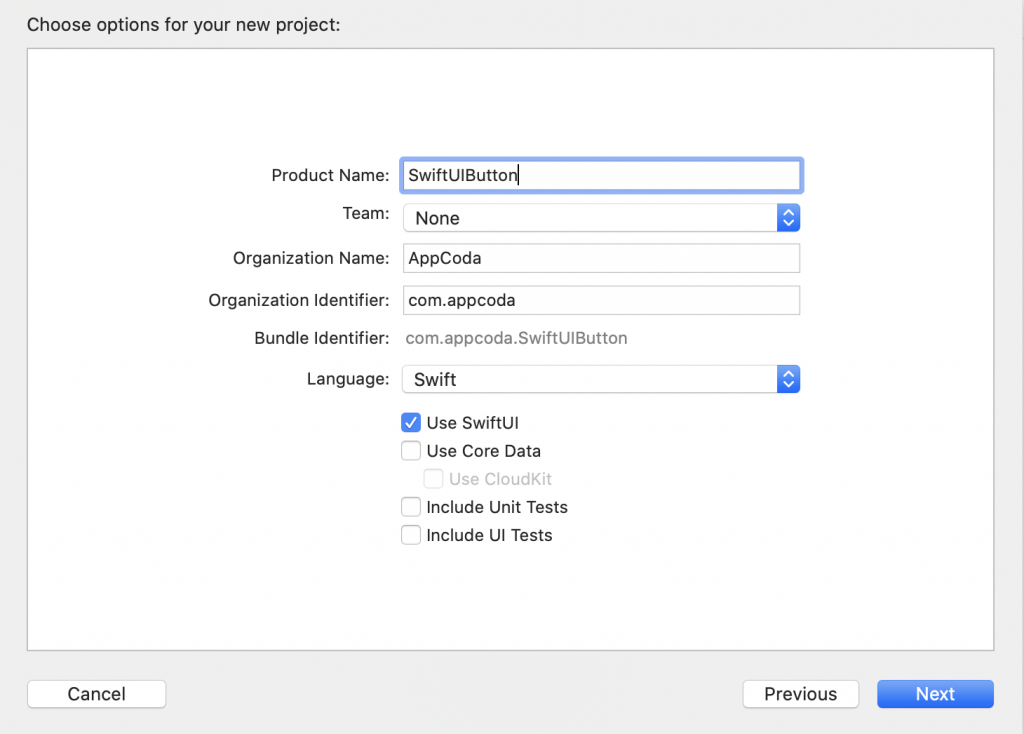
Once you save the projection, Xcode should load the ContentView.swift file and brandish a preview in the design canvas. In instance the preview is not displayed, you lot can click the Resume push button in the canvas.

Creating a Unproblematic Button with SwiftUI
Information technology's very easy to create a push button using SwiftUI. Basically, yous tin use the code snippet below to create a button:
| Button ( action : { // What to perform } ) { // How the push looks similar } |
When creating a button, y'all need to provide 2 code blocks:
- What to perform – the code to perform after the push is tapped or selected by the user.
- How the push button looks like – the code cake that describes the look & feel of the push.
For example, if you just want to turn the Hello Earth characterization into a push button, you can update the code like this:
| structContentView :View{ < br > varbody :someView{ < br > Button ( activity :{ < br > impress ( "Hello World tapped!" ) < br > } ){ < br > Text ( "Hello World" ) < br > } < br > } < br > } |
Now the Hello World text becomes a tappable button every bit you can run across information technology in the canvass.
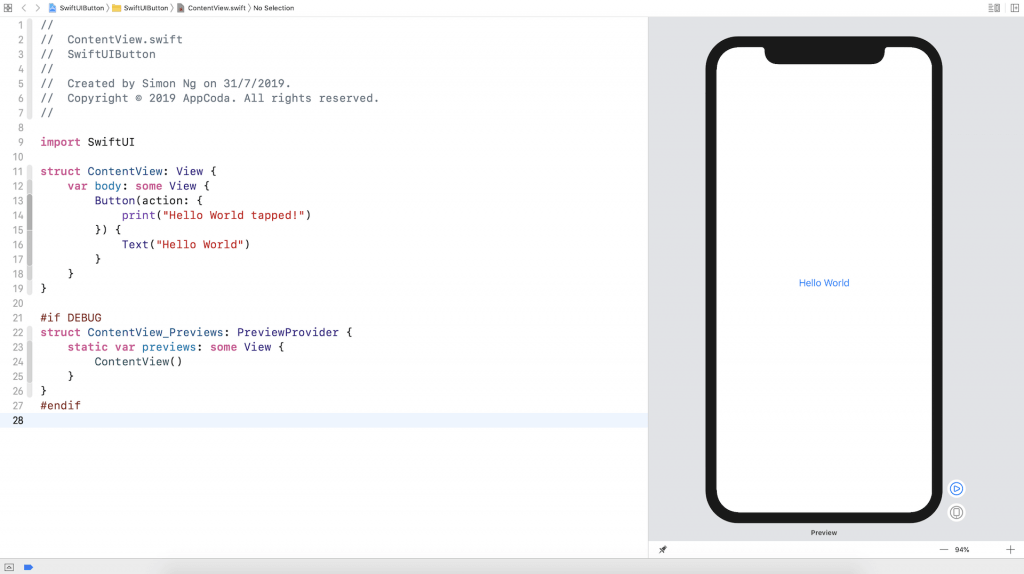
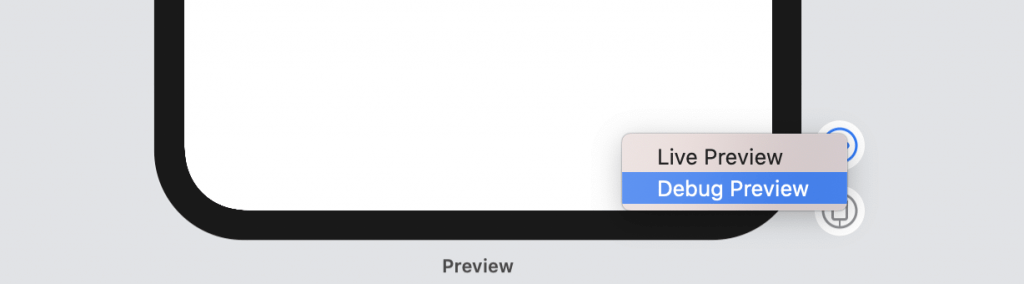
The push is now non-tappable in the design canvas. To exam it, click the Play button to run the app. However, in order to view the Hullo Earth tapped message, you lot have to right-click the Play button and then cull Debug Preview. You lot will see the bulletin on the console when you tap the button.
Customizing the Button'southward Font and Groundwork
At present that you should know how to create a simple push, permit'due south come across how to customize its wait & feel with the built-in modifiers. Say, to change the groundwork and text color, you can use the background and foregroundColor modifiers like this:
| Text ( "How-do-you-do World" ) . groundwork ( Color . royal ) . foregroundColor ( . white ) |
If you want to change the font type, you lot further utilize the font modifier and specify the font type (e.one thousand. .title) like this:
| Text ( "Hello Earth" ) . background ( Color . regal ) . foregroundColor ( . white ) . font ( . title ) |
Later on the alter, your push should look like the figure below.
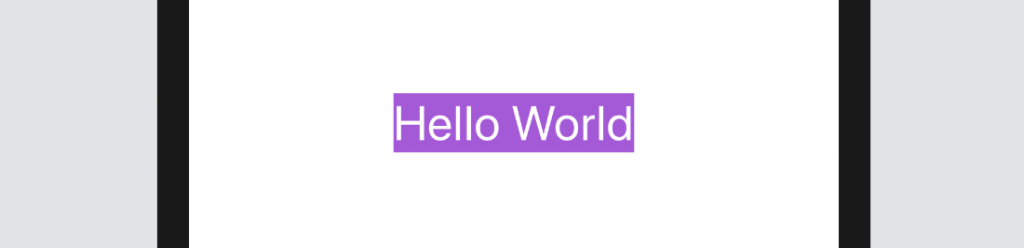
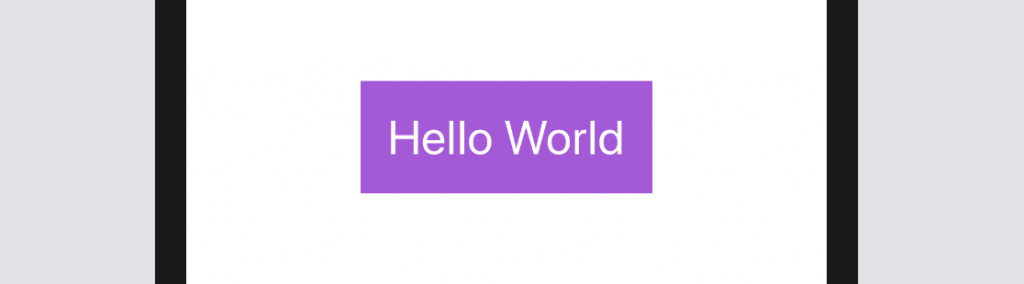
As you can see, the push button doesn't look very good. Wouldn't information technology be great to add some space around the text? To do that, you lot can use the padding modifier similar this:
| Text ( "Hello World" ) . padding ( ) . background ( Color . purple ) . foregroundColor ( . white ) . font ( . championship ) |
Later on y'all made the modify, the canvas should update the push appropriately. The push button should at present look much better.
The Order of Modifiers is Of import
1 thing I want to highlight is that the padding modifier should be placed before the background modifier. If you write the code similar below, the cease issue will be different.

If you lot place the padding modifier subsequently the background modifier, you can however add some paddings to the button just without the preferred background color. If you wonder why, you can read the modifiers like this:
| Text ( "Hullo Earth" ) . background ( Color . regal ) // 1. Change the background color to purple . foregroundColor ( . white ) // two. Set the foreground/font colour to white . font ( . title ) // 3. Change the font blazon . padding ( ) // four. Add the paddings with the chief color (i.e. white) |
Conversely, the modifiers will piece of work like this if the padding modifier is placed before the background modifier:
| Text ( "Hi Globe" ) . padding ( ) // 1. Add the paddings . background ( Color . purple ) // 2. Change the background color to royal including the padding . foregroundColor ( . white ) // three. Fix the foreground/font color to white . font ( . title ) // 4. Change the font type |
Adding Borders to the Button
It doesn't mean the padding modifier should always place at the very beginning. It merely depends on your button pattern. Let'southward say, you want to create a button with borders like this:

Y'all can modify the code of the Text control similar beneath:
| Text ( "Howdy Globe" ) . foregroundColor ( . purple ) . font ( . title ) . padding ( ) . border ( Color . imperial , width : five ) |
Here we set up the foreground colour to imperial and then add some empty paddings around the text. Theborder modifier is used to define the border's width and color. Please feel free to alter the value of thewidth parameter to come across how it works.
Let me give you another example. Let's say, a designer shows y'all the post-obit button design. How are you lot going to implement information technology with what you lot've learned? Before yous read the next paragraph, please requite yourself a few minutes to effigy out the solution.
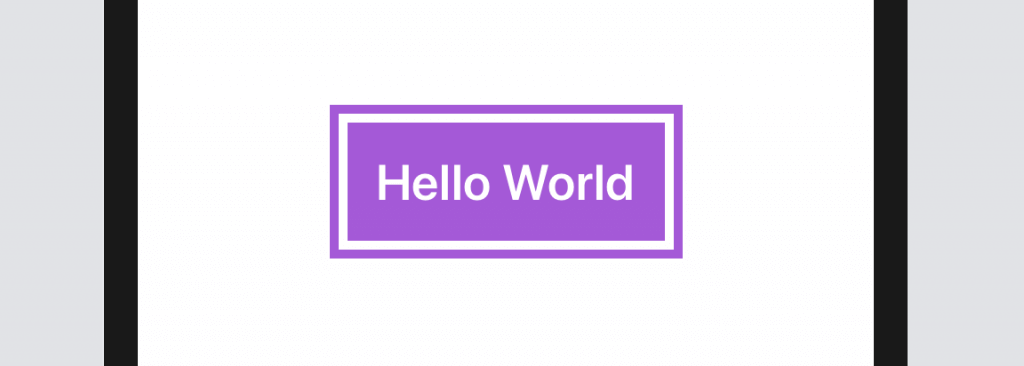
Okay, here is the code y'all need:
| Text ( "Howdy World" ) . fontWeight ( . bold ) . font ( . title ) . padding ( ) . background ( Colour . purple ) . foregroundColor ( . white ) . padding ( 10 ) . border ( Color . purple , width : 5 ) |
We use ii padding modifiers to create the button design. The get-go padding, together with the background modifier, is for creating a button with padding and purple background. The padding(10) modifier adds extra paddings around the button and the border modifier specifies to paint a rounded border in imperial.
Let'southward see a more circuitous case. What if y'all desire to pattern the push with rounded borders like this?
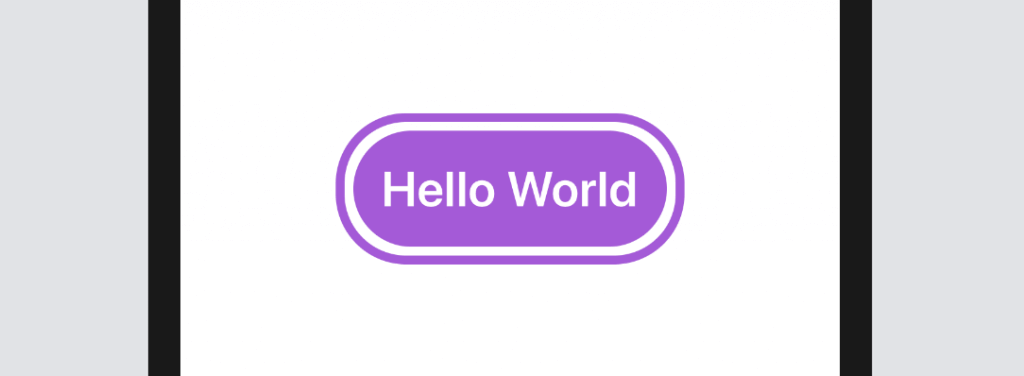
SwiftUI comes with a modifier named cornerRadius that lets yous easily create rounded corners. To return the button'south groundwork with rounded corners, you tin but use the modifier and specify the corner radius like this:
For the border with rounded corners, information technology'll take a little flake of work since the border modifier doesn't permit you to create rounded corners. So, what we need to do is to describe a border and overlay information technology on the button. Here is the final code:
| Text ( "Hi World" ) . fontWeight ( . bold ) . font ( . title ) . padding ( ) . groundwork ( Color . purple ) . cornerRadius ( 40 ) . foregroundColor ( . white ) . padding ( 10 ) . overlay ( RoundedRectangle ( cornerRadius : 40 ) . stroke ( Color . purple , lineWidth : 5 ) ) |
The overlay modifier lets you lot overlay another view on top of the current view. In the code, what we did was to describe a border with rounded corners using the stroke modifier of the RoundedRectangle object. The stroke modifier allows y'all to configure the color and line width of the stroke.
Creating a Push with Images and Text
So far, we simply work with text buttons. In a real globe project, you or your designer may desire to display a button with an epitome. The syntax of creating an image button is exactly the same except that you use the Image control instead of the Text control like this:
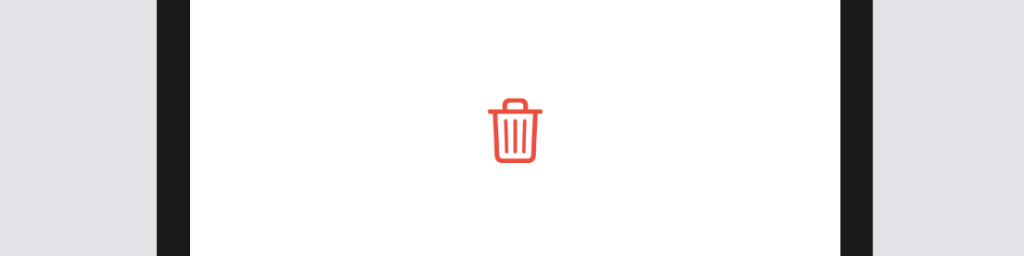
| Button ( action : { print ( "Delete button tapped!" ) } ) { Prototype ( systemName : "trash" ) . font ( . largeTitle ) . foregroundColor ( . blood-red ) } |
For convenience, we use the built-in SF Symbols (i.e. trash) to create the paradigm push button. Nosotros specify to use .largeTitle in the font modifier to make the image a chip larger. Your push should look like this:
Similarly, if you want to create a circular image button with a solid groundwork color, you can use the modifiers we discussed earlier. The figure below shows yous an example.

Y'all tin utilise both text and image to create a button. Say, you desire to put the word "Delete" next to the icon. Replace the code like this:
| Push ( action : { print ( "Delete tapped!" ) } ) { HStack { Image ( systemName : "trash" ) . font ( . title ) Text ( "Delete" ) . fontWeight ( . semibold ) . font ( . title ) } . padding ( ) . foregroundColor ( . white ) . background ( Color . red ) . cornerRadius ( 40 ) } |
Here we embed both the image and the text control in a horizontal stack. This will lay out the trash icon and the Delete text side by side. The modifiers applied to the HStack set the groundwork color, paddings, and round the push button's corners. The figure below shows the resulting button.

Creating a Button with Slope Background and Shadow
With SwiftUI, you lot can hands manner the button with gradient background. Not only can you lot a specific color to the background modifier, you tin hands utilize a slope effect for whatever buttons. All you demand to practice is to replace the post-obit line of code:
With:
| . groundwork ( LinearGradient ( gradient : Gradient ( colors : [ Color . red , Colour . blue ] ) , startPoint : . leading , endPoint : . trailing ) ) |
The SwiftUI framework comes with several built-in gradient effect. The code above applies a linear gradient from left (.leading) to correct (.trailing). It begins with cherry on the left and ends with blue on the right.

If y'all want to use the gradient from top to bottom, y'all can alter the line of lawmaking like this:
| . background ( LinearGradient ( gradient : Slope ( colors : [ Color . ruby , Color . blue ] ) , startPoint : . summit , endPoint : . lesser ) ) |
You lot're free to use your ain colors to render the slope issue. Permit's say, your designer tells you to utilize the following slope (A sample slope from uigradients.com):

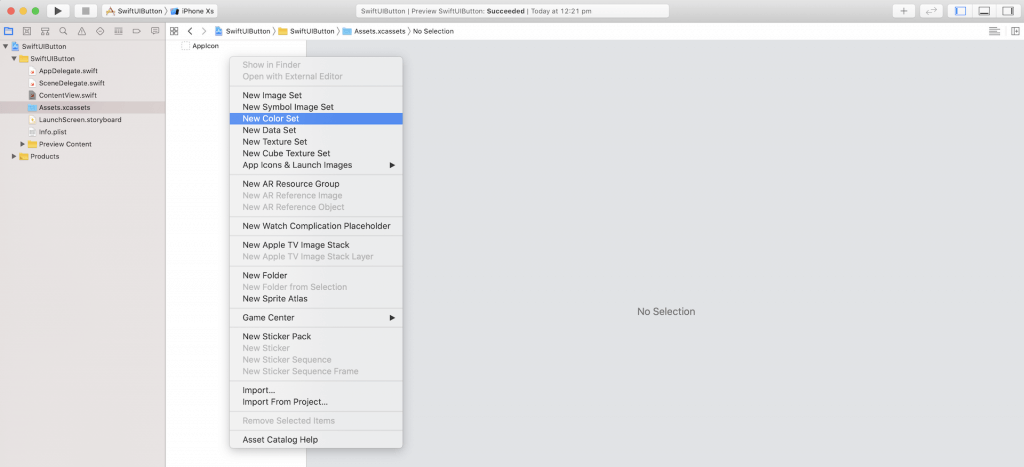
There are multiple means to convert the color code from hex to the compatible format in Swift. Here I'chiliad going to show one of the approaches. In the project navigator, choose the nugget itemize (i.due east. Assets.xcassets). Correct click the blank surface area (under AppIcon) and select New Color Set.
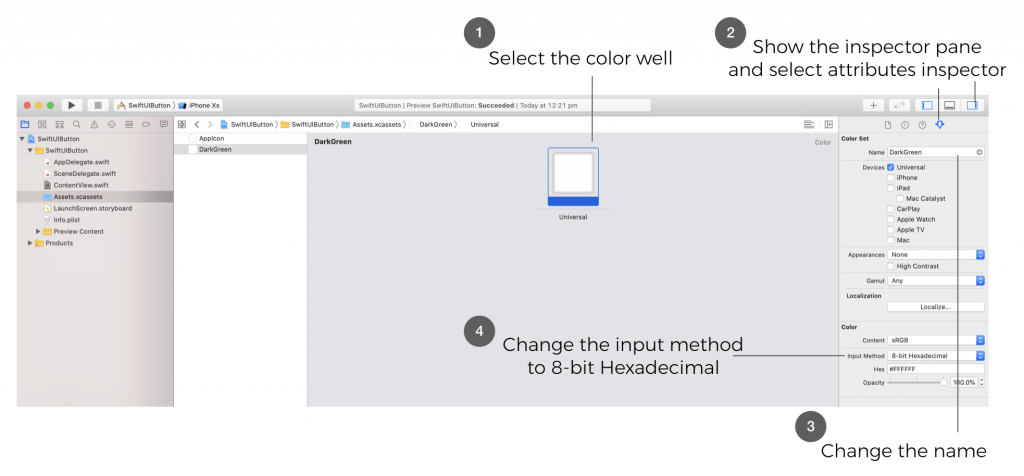
Next, choose the color well and click the Prove inspector button. Then click the Attributes inspector icon to reveal the attributes of a color prepare. In the proper noun field, set the name to DarkGreen. In the Color section, modify the input method to 8-bit Hexadecimal.
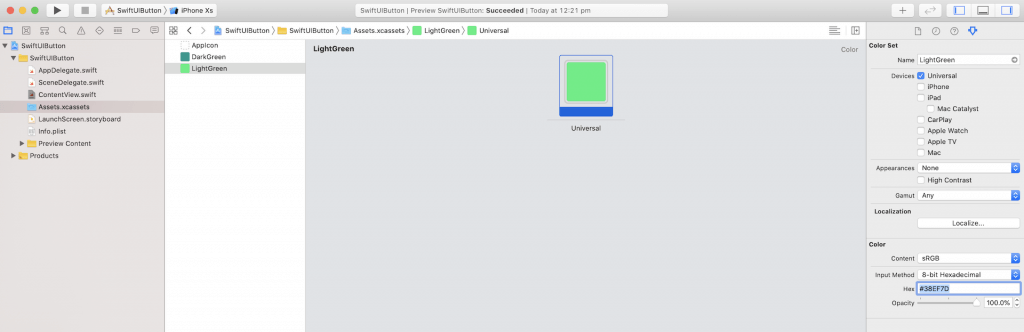
Now y'all can set the color code in the Hex field. For this demo, enter #11998e to define the color. Repeat the procedures to ascertain another color set for #38ef7d. You can proper name the color prepare LightGreen.
At present that yous've defined 2 color sets, let's become back to ContentView.swift and update the code. To use the color set, you lot only need to specify the name of the colour set like this:
| Color ( "DarkGreen" ) Colour ( "LightGreen" ) |
Therefore, to render the gradient with the DarkGreen and LightGreen color sets, all you need is update the background modifier similar this:
| . background ( LinearGradient ( slope : Gradient ( colors : [ Color ( "DarkGreen" ) , Color ( "LightGreen" ) ] ) , startPoint : . leading , endPoint : . trailing ) ) |
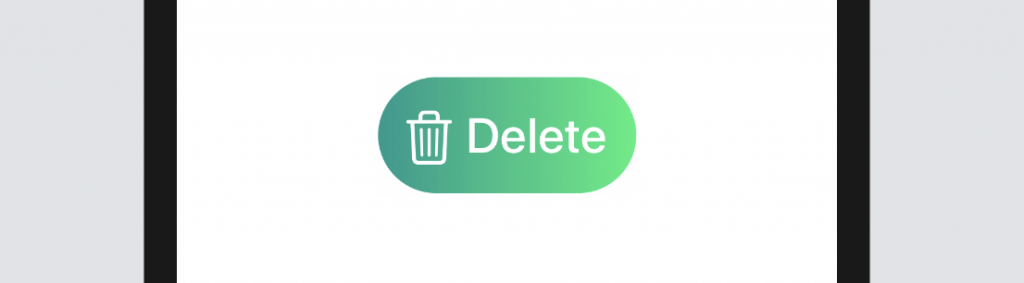
If you've fabricated the change correctly, your button should accept a overnice gradient background as shown in figure below.
There is one more modifier I want to show in this section. The shadow modifier allows you to describe a shadow around the button (or any views). Just add together this line of lawmaking after the cornerRadius modifier and see the effect:
Optionally, you lot tin control the color, radius, and position of the shadow. Hither is the sample code:
| . shadow ( color : . grey , radius : twenty . 0 , 10 : twenty , y : ten ) |
Creating a Full-width Push
Bigger buttons commonly take hold of user's attention. Sometimes, you may need to create a full-width push button that takes upward the width of the screen. The frame modifier is designed to let yous control the size of a view. Whether you desire to create a fixed size button or a button with variable width, you can make use of this modifier. To create a full-width button, you can change the Button code similar this:
| Button ( activeness : { impress ( "Delete tapped!" ) } ) { HStack { Epitome ( systemName : "trash" ) . font ( . championship ) Text ( "Delete" ) . fontWeight ( . semibold ) . font ( . championship ) } . frame ( minWidth : 0 , maxWidth : . infinity ) . padding ( ) . foregroundColor ( . white ) . background ( LinearGradient ( gradient : Gradient ( colors : [ Color ( "DarkGreen" ) , Color ( "LightGreen" ) ] ) , startPoint : . leading , endPoint : . trailing ) ) . cornerRadius ( forty ) } |
The lawmaking is very like to the i we merely wrote, except that nosotros added the frame modifier before padding. Here nosotros ascertain a flexible width for the button. We set the maxWidth parameter to .infinity. That means the push button will fill the width of the container view. In the canvas, information technology should now testify you a full-width button.
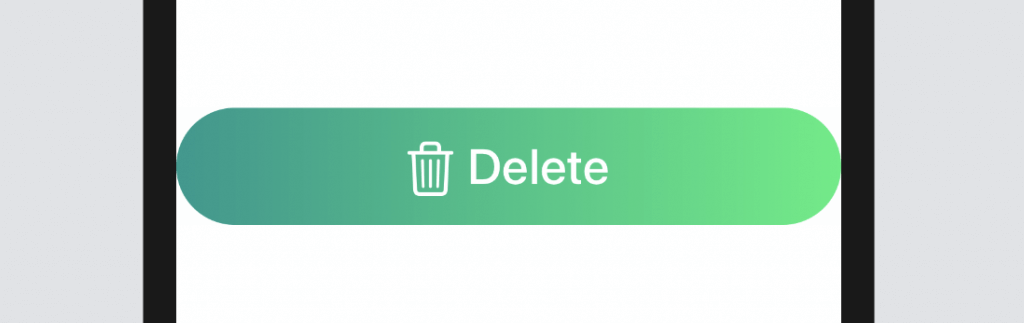
By defining maxWidth to .infinity, the width of the button will be adjusted automatically depending on the screen width of the device. If you lot want to give the button some more than horizontal space, insert a padding modifier later .cornerRadius(40):
| . padding ( . horizontal , twenty ) |
What'due south Coming Next
In this tutorial, I gave y'all an introduction to the Button control of SwiftUI. The power of this new framework allows developers to easily build flexible button controls with a few lines of code. In the side by side SwiftUI tutorial, we will dive deeper to animate a button tap and create a reusable button style.
Source: https://www.appcoda.com/swiftui-buttons/
0 Response to "How to Create an Upload Photo Button on Swift"
Post a Comment